Legacy Development Update: From Prototype to a Living World
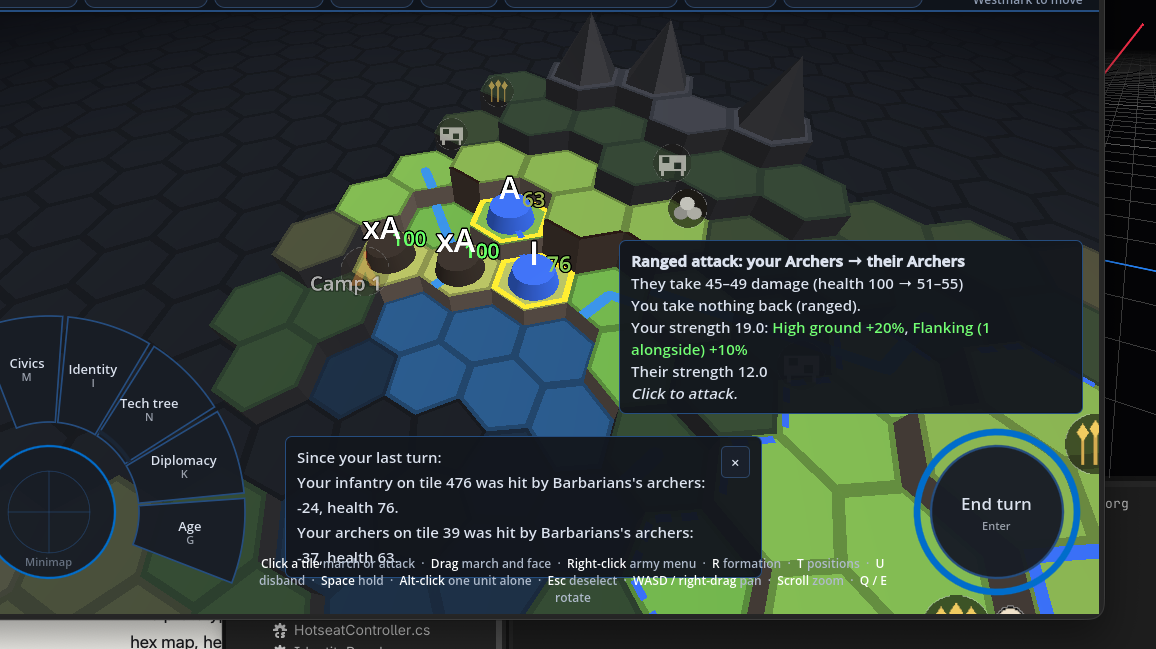
The tactical combat prototype is complete. Now the work is focused on bringing the wider game to life: cities, contested territory, civilisation identity and the turning points that shape a people’s history.
Legacy began with a question: can a strategy game make terrain matter in every battle, while letting a civilisation’s identity grow out of the choices its player makes?
The first prototype set out to answer the combat half. It put armies on a spherical hex map of cliffs, high ground, rivers and narrow crossings, then tested whether a smaller force could win by choosing its ground well. That prototype is now complete. Playtesting helped tune the combat, and the project has moved on to a much bigger challenge: building the first playable version of the full game loop.
Building a civilisation, one age at a time
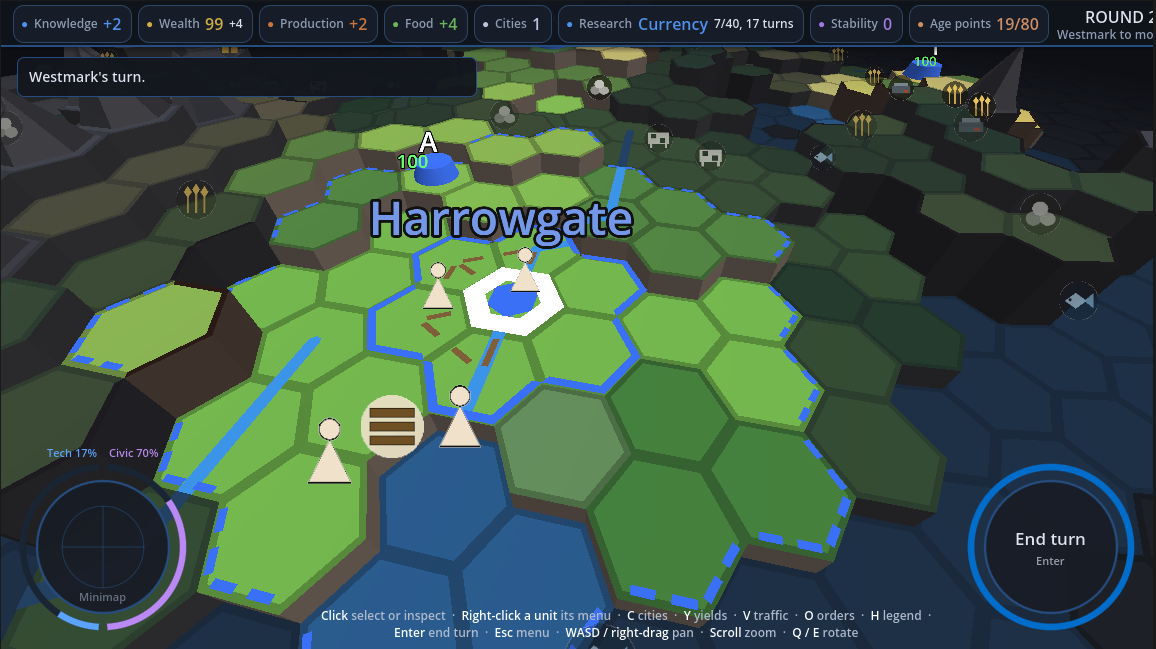
The current development phase is a one-age vertical slice: a compact, end-to-end section of the game designed to test whether its main systems work together.
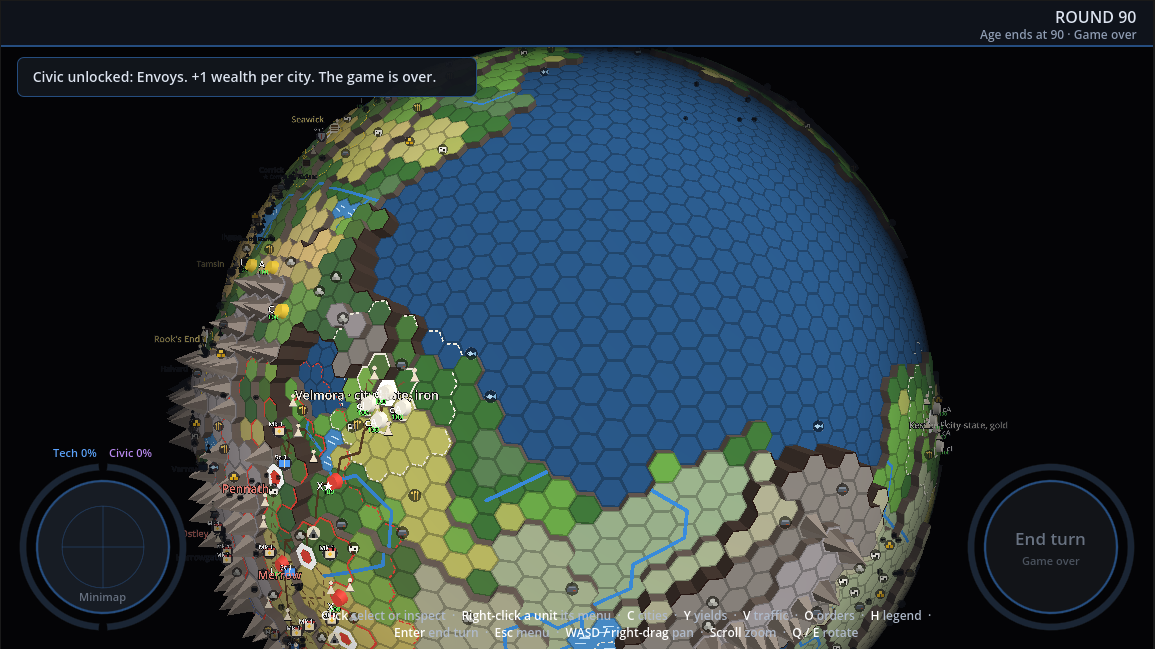
Players can explore a generated planet, found cities and grow them across the map. They can develop quarters, work improvements, research technologies and contest disputed land. War can break out over provocations and seized improvements, while peace offers a chance to end a conflict.
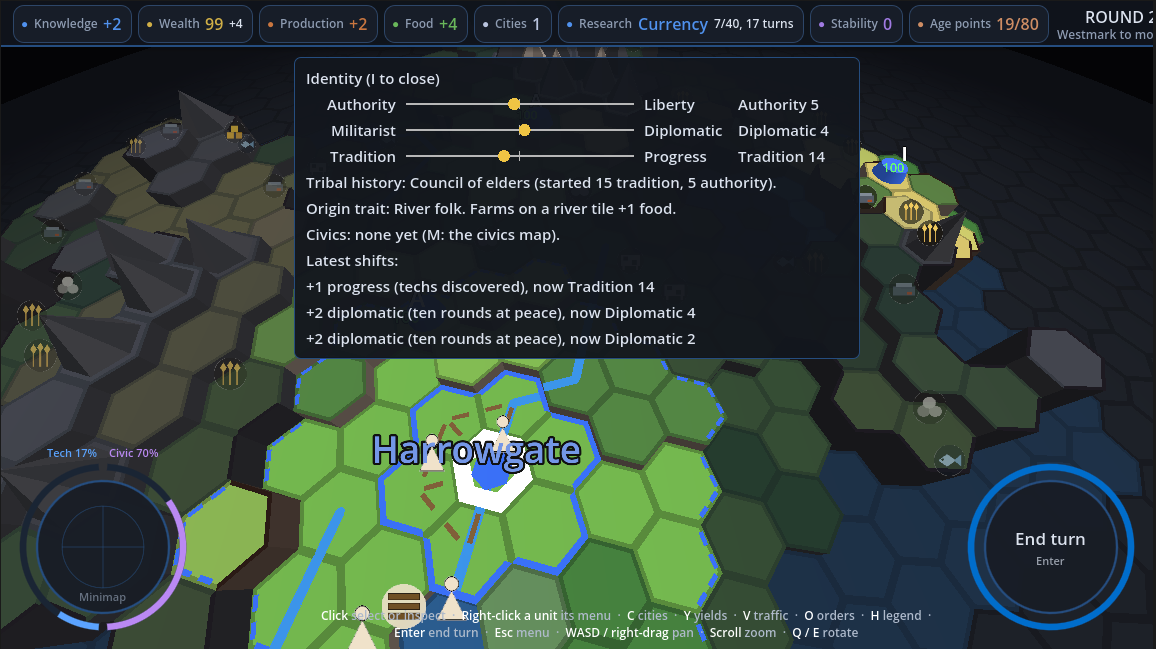
A civilisation’s identity also begins to take shape through play. Actions move it along different identity paths and can unlock civics. As the age progresses, players build standing and face a transition that can bring an heir or a revolution. Great deeds make armies, cities and quarters candidates for legendary status; the strongest are crowned at the end of the age.

What’s in the slice so far
The settlement and growth loop is playable, with two computer players able to expand and build. Territory, war and peace, technology, roads and connected resources, unit upgrades and army traditions have been added. Civilisation identity, civics, age transitions and legendary crowning are also in place.
The slice has since expanded to include barbarians and city-states, with trade deals available with city-states. The work now is focused on bringing the remaining pieces together: completing the computer opponents and front end, refining presentation and audio, and then tuning and playtesting the full slice from a new game through its first age transition.
Built for a larger game
Legacy is being developed in Godot with a C# rules library that runs separately from the visuals. The simulation is designed to be repeatable: the same starting seed and player actions should produce the same game. That foundation supports reliable replays and testing, and is intended to make online play possible later without rebuilding the game’s rules.
The first public release is planned as a single-player game for Steam. It is intended to include all ages, a legacy victory, and a cataclysm that gives each civilisation a final chance to secure its place in history. Online multiplayer, the full royal dynasty system, curated maps and a space-age layer are longer-term plans.
There is still plenty to build. The immediate goal is to finish the one-age slice and see whether its central idea holds up in play: the land shapes how you play, and how you play shapes who your civilisation becomes.